
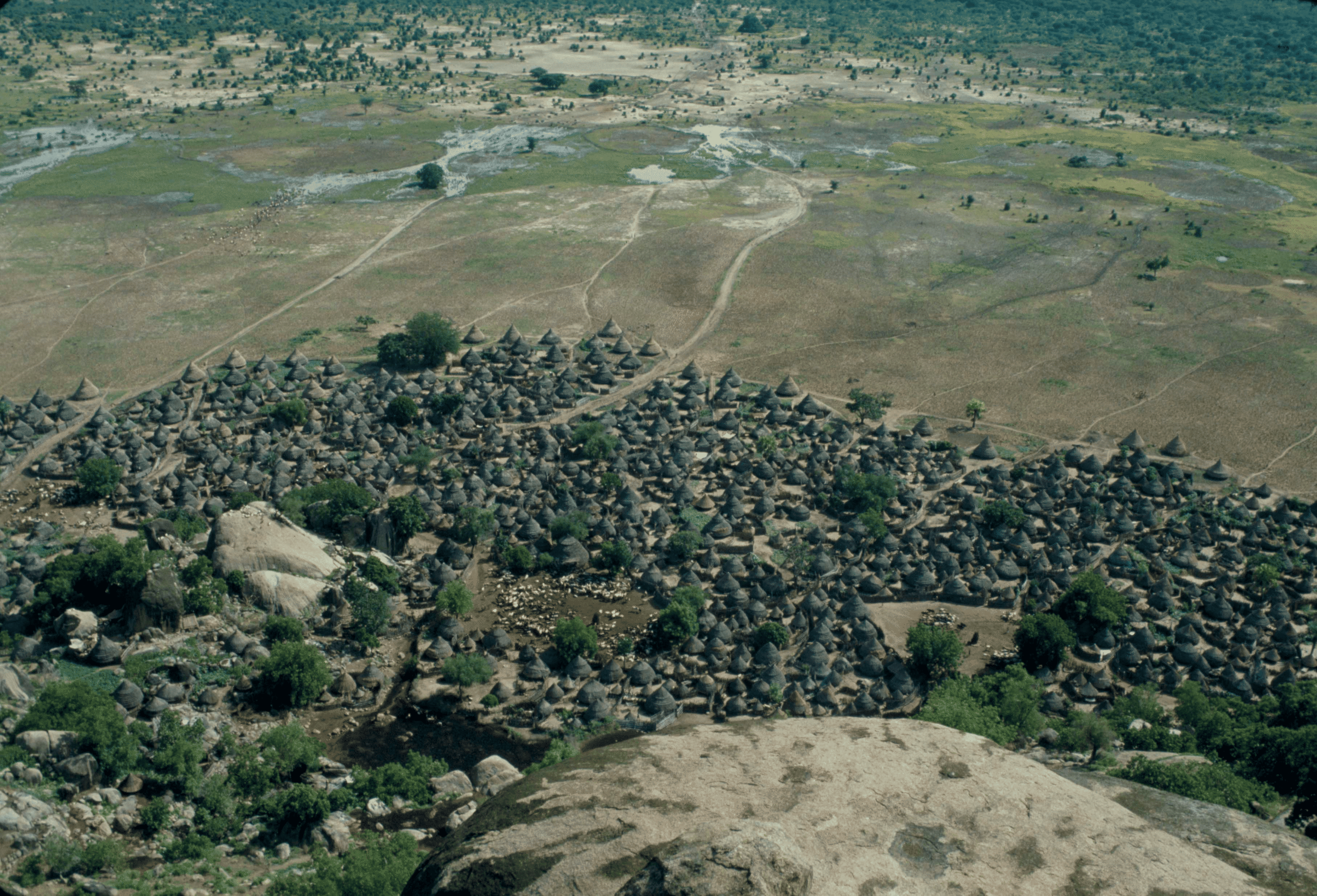
The Bura Village: Photo by Eisei Kurimoto, 1982
This is a chief who manages all affairs of a village, and in return, his subjects cultivate his farm, build and repair his homestead. Each Päri section has their own village chief and his office is hereditary. For example, the Bura section chief comes from the Landi Clan.
This is a hereditary chief who controls the rain, and this role is held by the Wiatuo section chief who is believed to possess the rain stone (𝘶𝘨𝘰𝘪). As a result, all Päri sections, except the Kor, used to pay tributes to him as their overall chief of Päri (𝘳𝘸𝘢𝘥𝘩𝘪-𝘗ä𝘳𝘪). However, the failure of the rain chief to control rain, and the related violence by Wegi Paach against the rain maker has undermined the office. For example, the Queen, Nyibur, the wife of the late Rain Chief Pidelle, was murdered in 1984 due to the persistent drought.
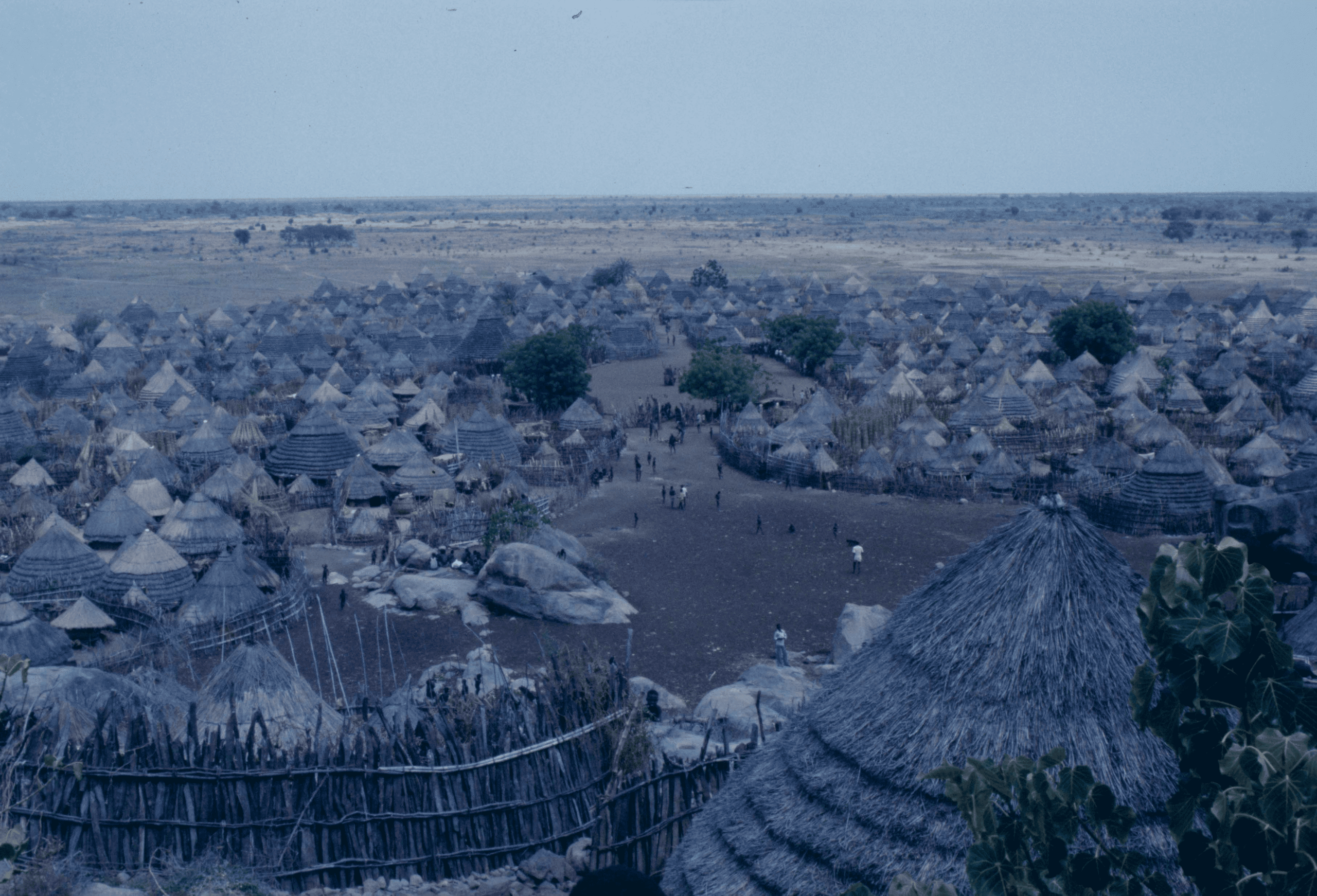
The Wiatuo Village. Photo by Eisei Kurimoto, 1979.
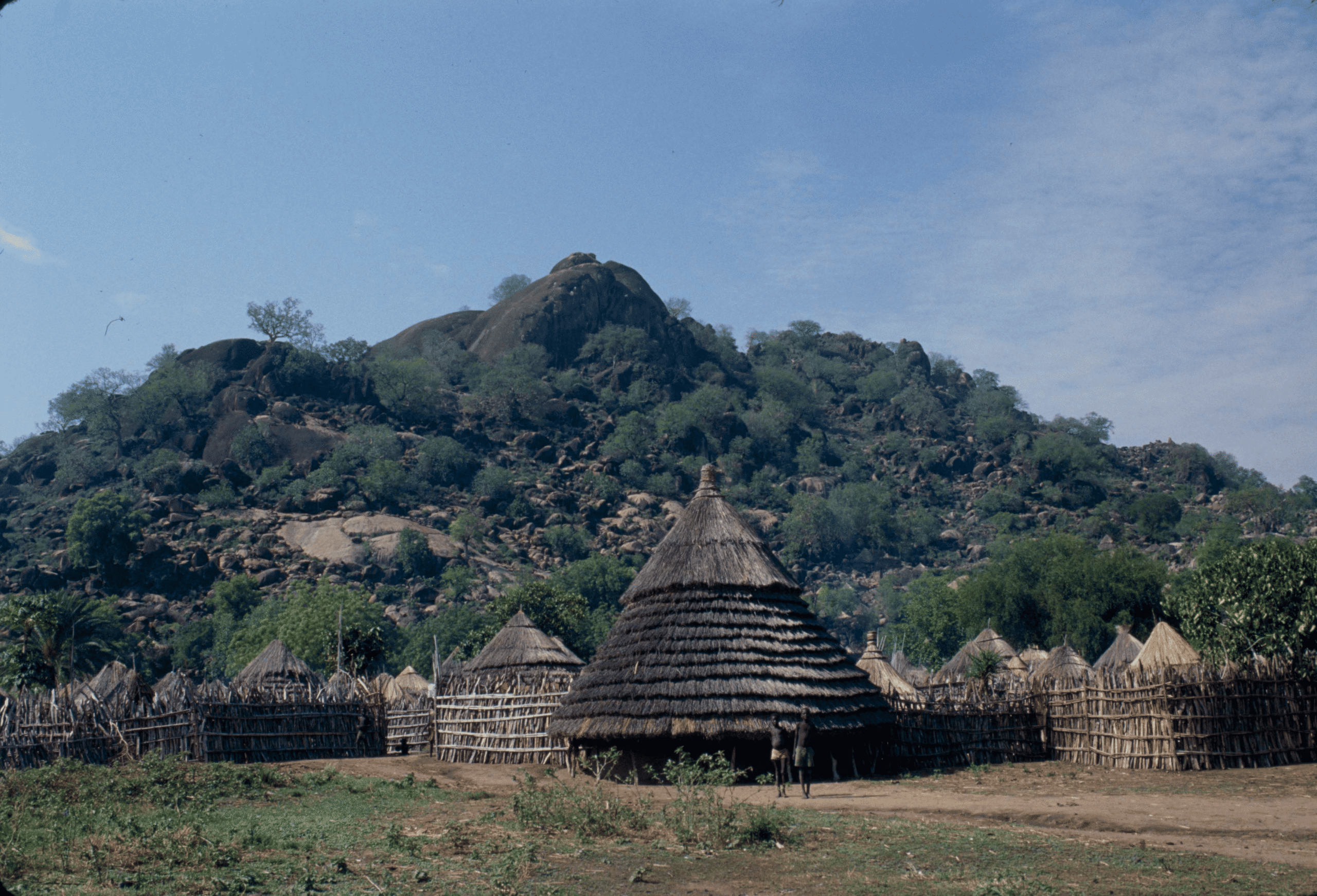
The Pucwa Village. Photo by Eisei Kurimoto, 1984
This is a chief who controls (𝘸𝘦𝘢𝘷𝘦r) birds from destroying sorghum, and this hereditary role is held by the Alwori clan of Pucwa. Just like the rain chief, the power of this chief has declined as s/he is often held accountable for failing to control birds through expulsion, beating and even lynching. For example, a bird chief was killed in 2015 for the alleged failure to stop the destruction of sorghum by weave birds.
This is a chief who performs rituals to gods [jwok] at Lafon Gave (Ngang Lipul) through offering sacrifices, such as fresh sorghum and sorghum beer and game meat. He also leads collective invocation (kuk) for the prosperity and welfare of the whole Päri community, especially during the annual harvest festival (Nyalam). This role is held by the Naam Clan of Pugeri.
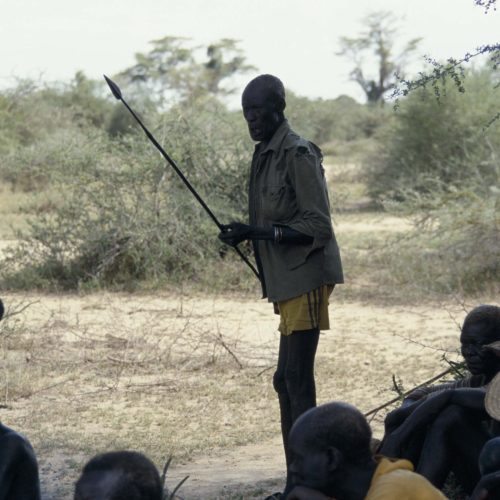
The Spiritual Chief, Muthuokori, conducts innovations (kuk). Photo by Eisie Kurimoto, 1985
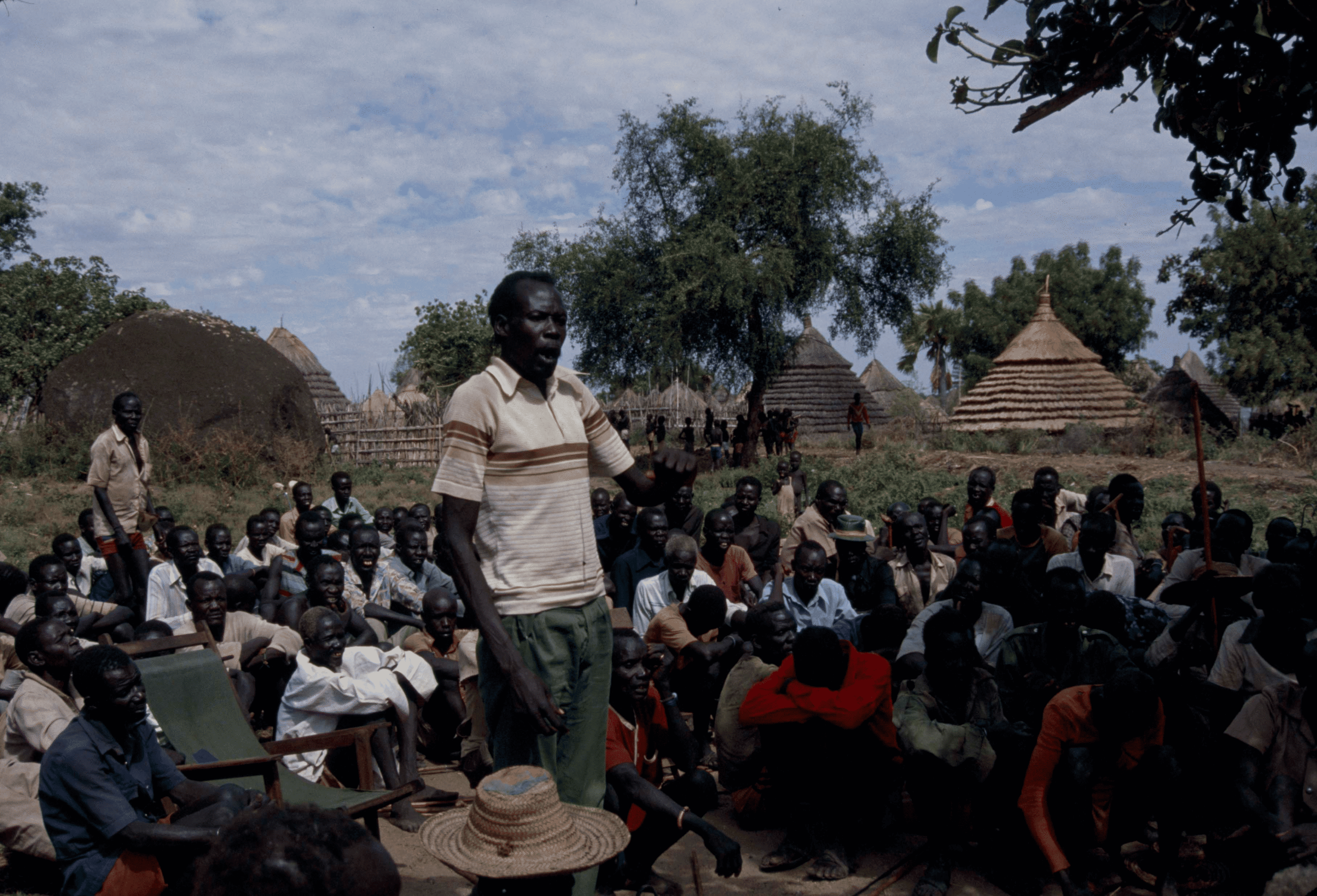
Former chief, Pasquale Bule (Arianga) addressing people. Photo by Eisei Kurimoto, 1985
This chief presides over the administration and judicial issues and acts as an interlocutor between the government and the community. This chieftaincy system was introduced in the 1930s by the British as a form of indirect rule. This role is currently divided into three parts, with paramount chief in county level, the executive chief in Payam level and sub-chief in boma level. Although it remains relevant, the power of the chief has declined due to conflict and competitions with government and traditional institutions.
The Wegi Paach is the ruling age set that is responsible for the security and welfare of the entire community. The initiation into Wegi paach used to happen peacefully every 10 years. However, this has changed recently as the transfer of power has been violent. Although it was adopted from Lopit, the ruling age group system (𝘮𝘰𝘫𝘰𝘮𝘪𝘫𝘪) has become the most powerful and influential over the years, with powers to adopt existing rules or enforce new ones, such as making education and farming compulsory.
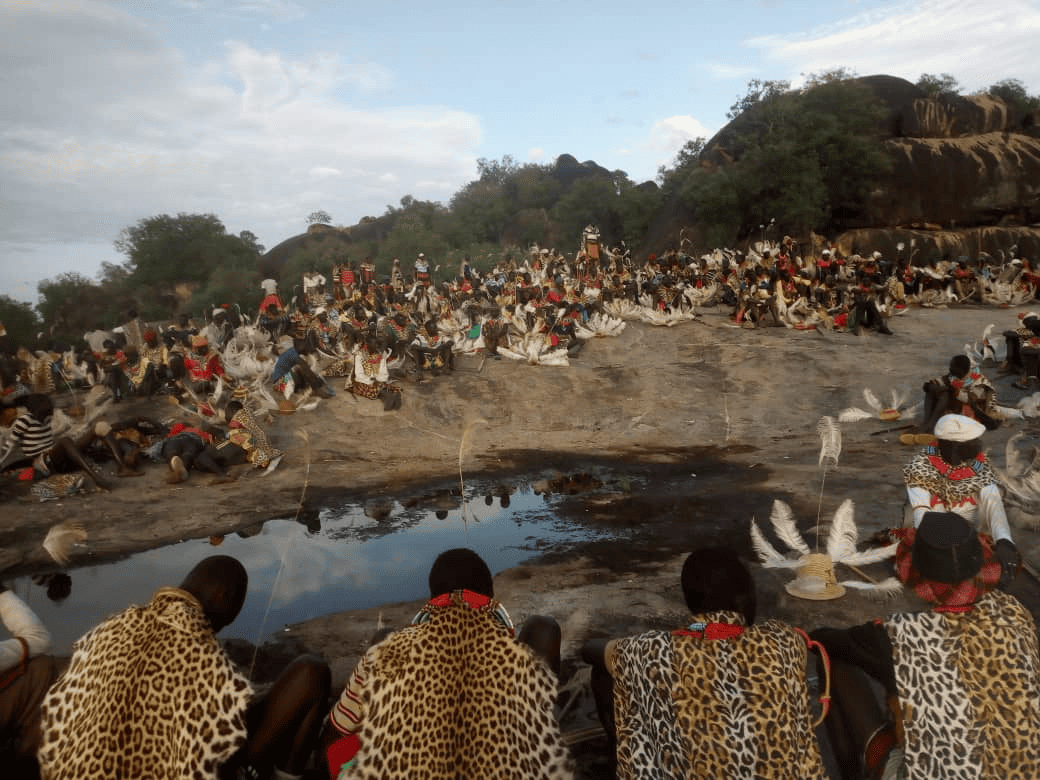
The Kinyi Wegi Paach. Photo by Mark Baramoi, 2020.
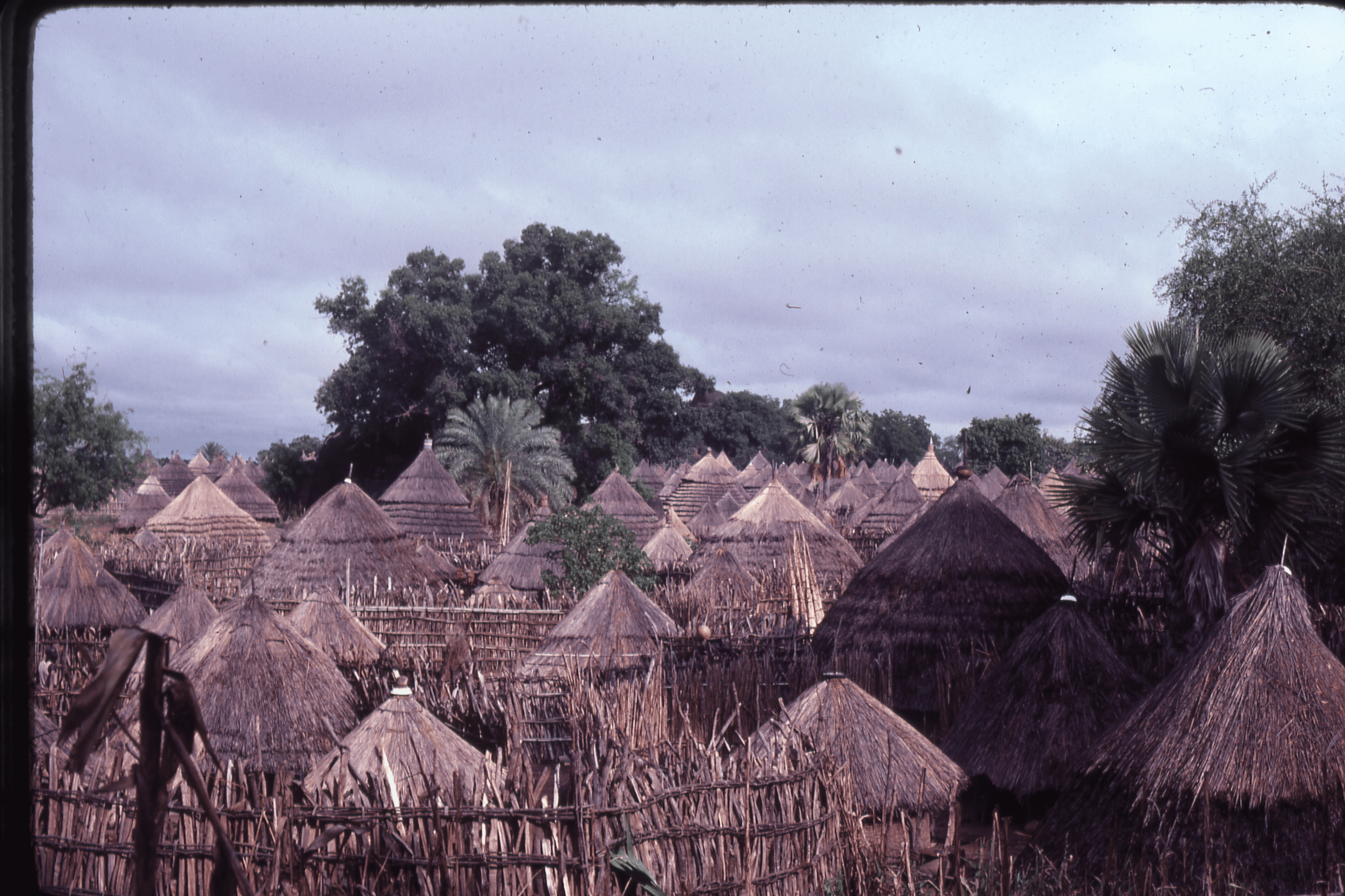
The Kor Village. Photo by Philip Winter, 1980.
This a justicial system that is presided over by the section chiefs of Wiatuo and Kor who act as judges (𝘓𝘪𝘬𝘸𝘦𝘳𝘪). The judge’s main role is to settle murder and inter-village disputes, provide protection to suspected murderers who enter their homesteads, and cleanse the suspects from evils. To settle a murder case, the judge establishes a panel of judges composed of elderly people from various villages. With his stick (𝘭𝘪𝘬𝘸𝘦𝘳𝘪), the judge separates the disputing parties and rules on blood compensation in the form of cattle or a girl to settle a dispute. The girl compensation practice has been abandoned due to the opposition from the church and the government.
Kaboore is an assembly of mainly wegi paach and elders who meet to deliberate on key issues. The assembly house is the tallest building in the village, which is located at the edge of the play ground (𝘐𝘵𝘩𝘸𝘰𝘳𝘰) and is fenced with a wooden fence (𝘭𝘪𝘨𝘢𝘢𝘯𝘪). Inside, it has a wooden seating platform (𝘱𝘦𝘦𝘥𝘩𝘦) with a grass-thatched roofing, and wooden wall made up of ebony poles (𝘭𝘰𝘰𝘥𝘪) To discuss an issue, a meeting is convened with participants sitting according to their age groups. For example, Wegi paach sits next to the entrance. During the deliberations, each participant is allowed to speak. However, the views of elders are advisory in nature, with the wegi paach having the final say.
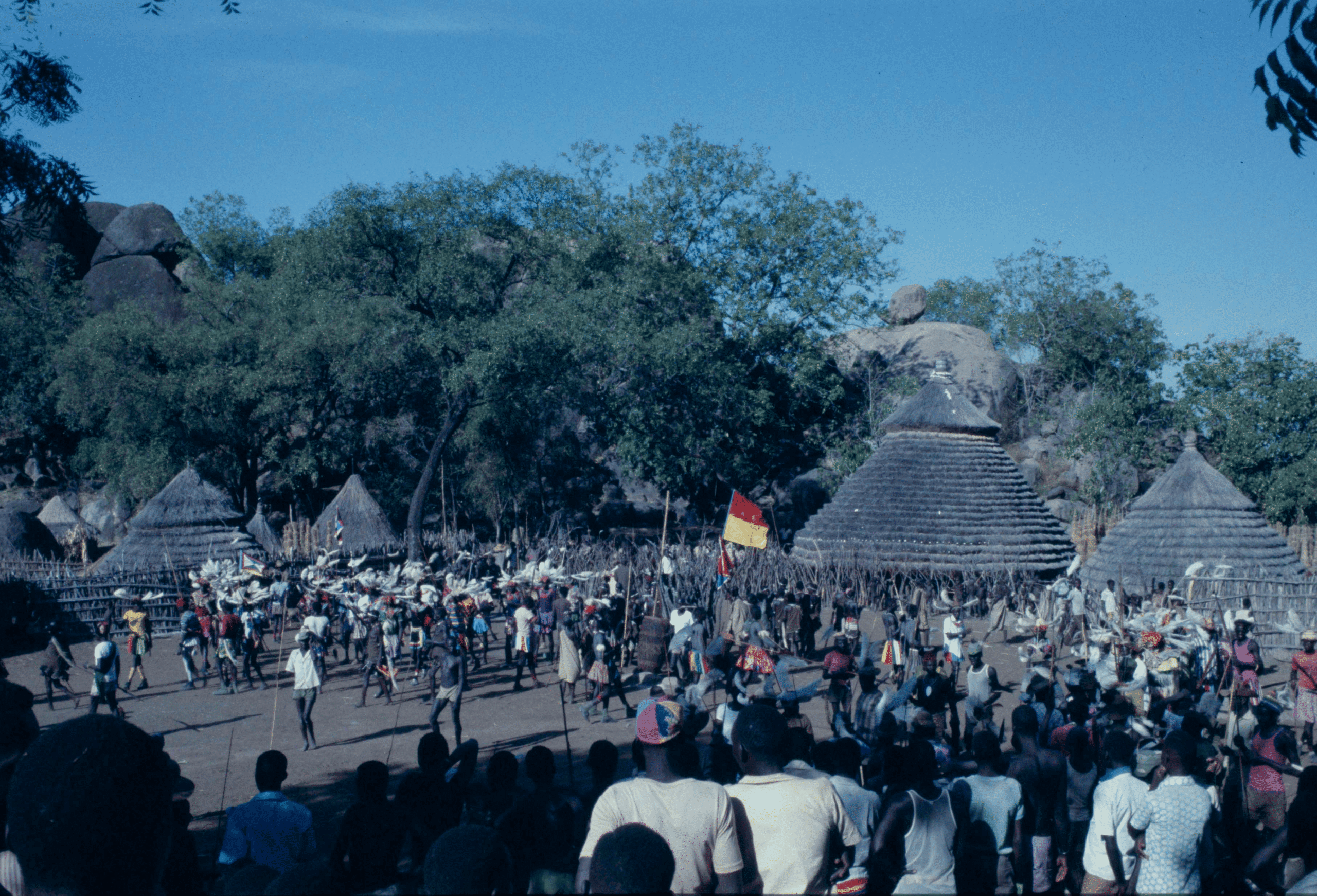
The Assembly house (Kaboore) at Angulumeri Village. Photo by Eisei Kurimoto, 1979